

Careers rarely follow a straight path. Instead, they evolve through a series of choices, experiences, and lessons that only make sense when viewed in hindsight. But what if you could start seeing those connections early on?
Careers rarely follow a straight path. Instead, they evolve through a series of choices, experiences, and lessons that only make sense when viewed in hindsight. But what if you could start seeing those connections early on?
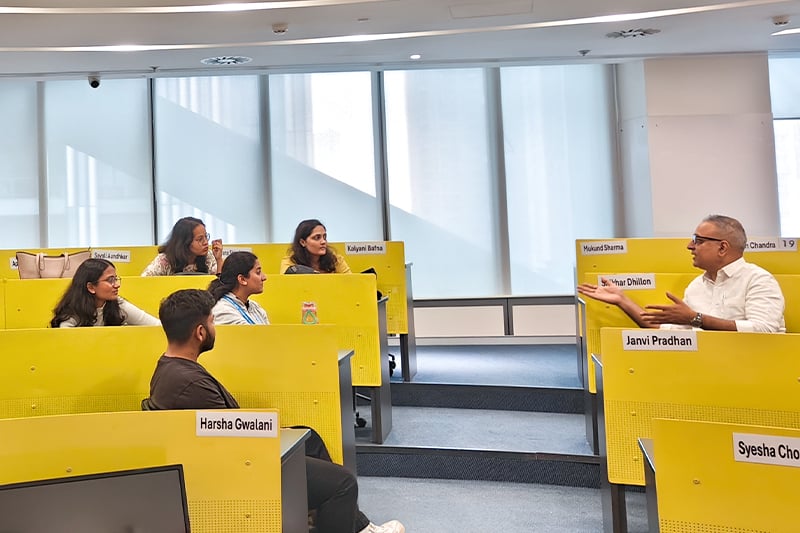
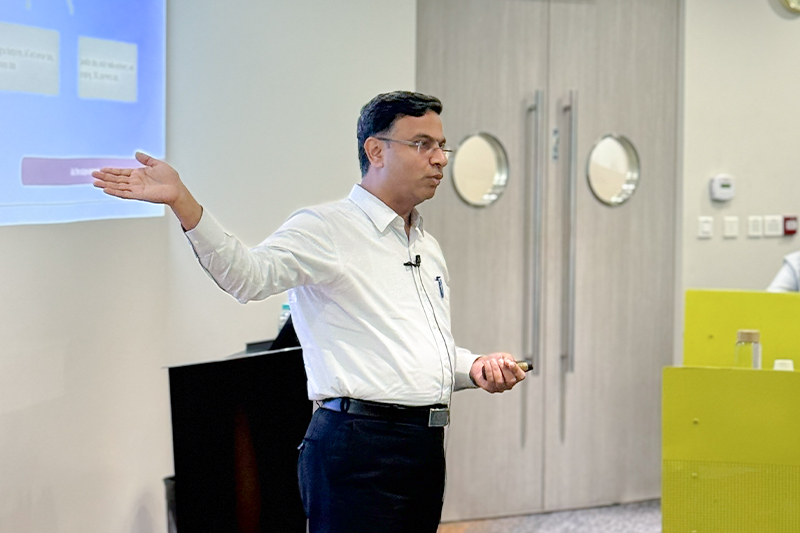
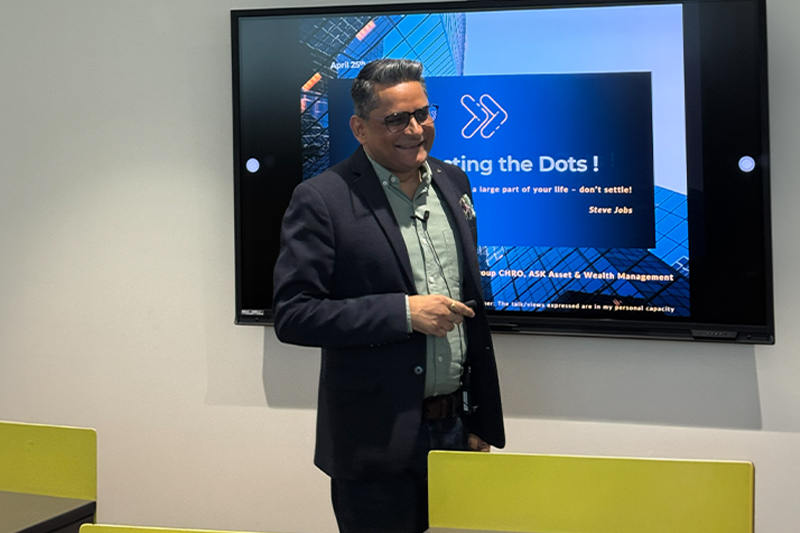
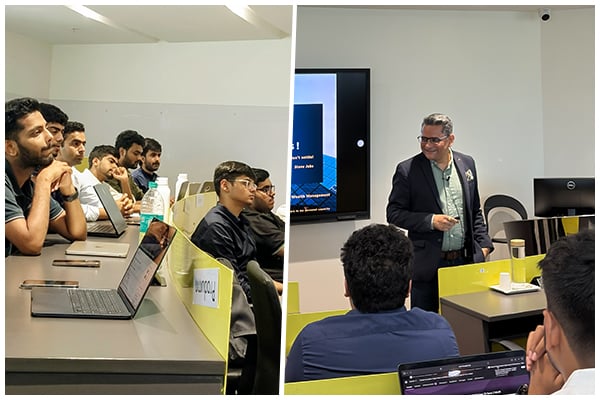
This was the key idea behind a recent guest lecture titled “Connect the Dots” by Amit Singh, Group CHRO at ASK Private Wealth. This session encouraged the MFWM students to rethink how they approach careers, growth, and professional identity.
Understanding an industry in transition
The session began with an overview of the wealth management industry. With more firms entering the space and demand for talent increasing, the industry is becoming more competitive.
For students, this creates strong opportunities. At the same time, it also means they need to focus on building skills that help them stand out and create value.
Careers are portfolios, not ladders
At the heart of the session was a powerful shift in perspective. It highlighted that careers are not linear ladders; instead, they are built through a mix of experiences. Drawing from his own journey, Amit Singh broke career progression into three distinct phases:
- Early career: Focus on building skills and establishing credibility
- Mid-career: Develop judgment, decision-making ability, and influence
- Senior roles: Drive impact through leadership and talent stewardship
This framework encouraged students to understand that every role plays a part in shaping their future.
Thriving in a skill-based economy
As industries evolve, so do expectations from professionals. The session highlighted the growing importance of becoming a T-shaped professional, someone with deep expertise in one area and a broad understanding across multiple functions. In this skill-based economy, technical mastery alone is no longer enough. The ability to collaborate, communicate, and adapt across domains is what truly sets individuals apart.
What sets professionals apart
One of the most impactful parts of the session focused on what differentiates high-performing professionals. According to Amit, strong professionals stand out by building credibility through their knowledge, showing reliability through consistent performance, and forming meaningful relationships. Together, these qualities play an important role in creating long-term success in any career.
The session also offered several actionable insights that students can carry into their careers:
- Focus on learning and responsibility early in your career, not just salary
- Performance helps you get opportunities, but behaviour helps you grow
- Relationships play a big role in career growth
- Your reputation is important and builds over time
- Stay involved, ask questions, and take ownership
One simple idea that particularly resonated with the students was the importance of “staying in the room”. It signifies how showing up consistently and staying committed makes a big difference over time.
Looking at the bigger picture
Beyond immediate career decisions, the session encouraged MFWM students to think long-term. Small setbacks are part of the journey, but they should not affect long-term goals. The session concluded with a simple yet powerful takeaway: build your career for yourself, not just for the next opportunity.
Tracking your growth, understanding your “why,” and making intentional choices can help create long-term value, both professionally and personally.