

In today’s hyperconnected world, marketing no longer operates within the comfort of familiar borders. Brands speak to audiences that differ not only in language, but in values, habits, media consumption patterns, and cultural frames of reference. The ability to resonate across cultures while still creating relevance at the local level has become one of the defining capabilities of successful global marketers. This is not just a theoretical shift; it is a practical, measurable strategic necessity.
In today’s hyperconnected world, marketing no longer operates within the comfort of familiar borders. Brands speak to audiences that differ not only in language, but in values, habits, media consumption patterns, and cultural frames of reference. The ability to resonate across cultures while still creating relevance at the local level has become one of the defining capabilities of successful global marketers. This is not just a theoretical shift; it is a practical, measurable strategic necessity.

The New Reality: One World, Many Worlds at Once
Modern marketing environments are characterised by what I call converging divergence. While globalisation has integrated economies, technologies, and information flows, consumer expectations have grown more individualistic, localised, and identity-driven. The result is a world where brands must strike a delicate balance: deliver a unified global message while making each audience feel uniquely understood.
This requires marketers who are not only technically competent but culturally intelligent, able to decode the subtleties of behaviour, symbolism, emotion, and context. These competencies lie at the heart of the Global MBA (GMBA) program, where students learn directly from faculty with decades of experience in global industry and academia.
Real Markets, Real Cultures, Real Learning
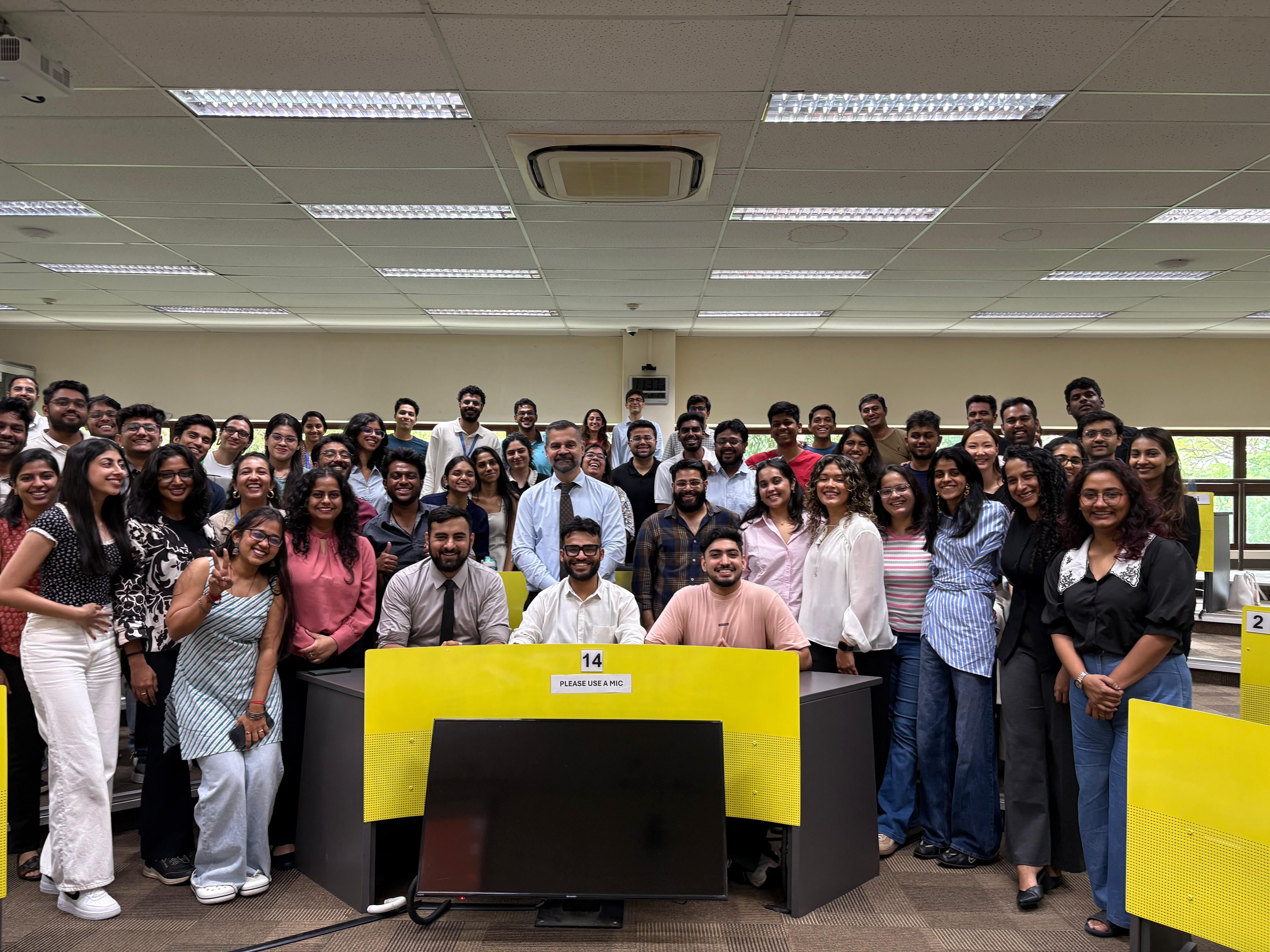
In the GMBA classrooms, learning is rooted firmly in practice. Our faculty members come from a wide variety of cultural and professional backgrounds. Many have worked as marketing strategists, consultants, entrepreneurs and business executives across Europe, Asia, the Middle East, Australia, and the US. Students therefore benefit not only from academic theory, but also from real-world exposure to how cross-cultural marketing plays out in global boardrooms, agencies, and markets.
Our teaching approach is consistently anchored in:
- Real cases from live global brands
- Practical application through simulations and fieldwork
- Cross-country comparative projects
- Industry guest speakers across time zones
- Current market data, not outdated textbook scenarios
This orientation transforms students from passive learners into active problem-solvers who can evaluate opportunities, anticipate cultural nuances, and design campaigns tailored to diverse consumer segments.
For example, during our cross-cultural marketing sessions, we work extensively with real cases from global brands such as McDonald's and Starbucks, examining both their successes and their mistakes across international markets. Students analyse how McDonald's adapts its menu to local tastes, such as the McArabia in the Middle East or vegetarian options in India, while also studying instances in which certain products failed because they did not align with local habits or expectations. We also look closely at Starbucks, which faced major difficulties in Australia where it expanded too quickly, misunderstood local coffee culture, and offered products that did not align with what Australian consumers valued. These costly mistakes became important learning points for the company and shaped the more careful, culturally sensitive approach Starbucks later used when entering Italy, a country with one of the world's strongest and most traditional coffee cultures. By understanding both the failures and the corrective strategies, students see how global brands improve their cultural awareness, refine their positioning, and build more sustainable market strategies. These real-world examples deepen understanding of what it takes to achieve true cross-cultural resonance.
Bridging Cultural Differences: Principles for Modern Marketers
The art of cross-cultural resonance rests on three core principles:
1. Cultural Empathy Over Assumptions
Effective global marketing requires humility, an openness to learning, listening, and adapting. Great marketers do not impose meaning; they uncover it by understanding how diverse communities interpret messages, images, and symbols.
2. Localisation Without Losing Global Identity
Brands must maintain coherence while adapting to local realities. Students learn how companies achieve this through modular branding, flexible communication strategies, and culturally specific value propositions.
3. Consistency in Purpose, Agility in Execution
Purpose-driven brands resonate globally when their core values remain constant across borders, while their executions reflect creativity tailored to each market’s needs. These principles are reinforced through practical work in the program, where students develop marketing strategies for real companies expanding across regions. They test messages on different cultural groups, analyse responses, and refine campaigns just as global managers do.
Preparing Students for Global Careers
One of the strengths of the GMBA program is its strong employability orientation. Many of our graduates secure roles in marketing, consulting, strategy, brand management, and digital communication across Asia-Pacific, Europe, and the Middle East. This is not coincidental; it is a direct result of:
- Industry-engaged curriculum
- A global network of faculty and alumni
- Experiential learning across multiple cities
- Career services integrated with employer expectations
When students engage in cross-cultural projects, simulations, and capstones with multinational firms, they build portfolios and skills that translate directly into job opportunities. Employers consistently highlight that GMBA graduates exhibit a rare combination of technical skill, cultural literacy, and global adaptability.
Why Cross-Cultural Resonance Matters More Than Ever
Today’s fragmented markets reward brands that understand micro-communities rather than mass categories. Whether a company is entering Southeast Asia, the GCC, Europe, or emerging African markets, success hinges on the ability to speak to consumers in culturally meaningful ways. That includes understanding:
- How trust is built in collectivist vs. individualist societies
- How humour and emotion vary across regions
- How digital communities form, influence, and advocate
- How cultural values shape decision-making
- How global messages must be tuned to local rhythms
This is precisely why cross-cultural marketing is not an optional skill but a cornerstone of modern global management.
Looking Ahead: Marketers as Cultural Translators
The future belongs to marketers who act as cultural translators: professionals who can bridge meaning, create messages that travel, and design strategies that celebrate diversity rather than overlook it. As faculty, we see firsthand how students evolve into these global leaders. Through immersive learning, critical discussions, and real cases, they develop the ability to understand not just markets, but people.
At a time when brands must connect authentically and responsibly across borders, cultural intelligence becomes one of the most powerful strategic assets. The GMBA program ensures that students master this asset, preparing them to lead, communicate, and inspire in an increasingly interconnected yet culturally complex world.

About the author:
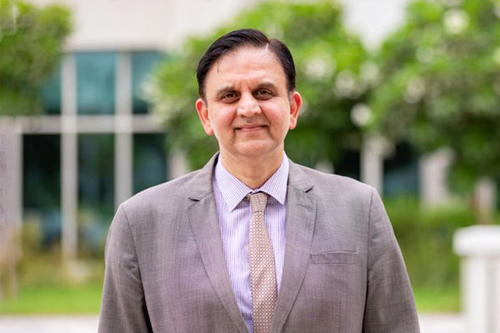
Dr Demetris Vrontis is an Adjunct Faculty member at SP Jain Global specialising in Marketing. With a PhD in Marketing and a strong global research portfolio, he brings deep academic insight and practical industry perspective to his teaching.
Three key skills for leaders in the age of AI and digital reinvention
Breaking Barriers and Building Futures: The Leadership Journey of Aakanksha Bhargava, a GMBA Alumni