



Imagine you have cracked food delivery in India. Real-time tracking. Aggressive cashback. Dozens of cuisines. Customers who compare apps, switch apps, and order three times a week. You have the playbook. You know it works.
Imagine you have cracked food delivery in India. Real-time tracking. Aggressive cashback. Dozens of cuisines. Customers who compare apps, switch apps, and order three times a week. You have the playbook. You know it works.
So, you take it to Manila.
It fails. Not slowly. Immediately.
Your app does not accept the payment methods that urban Filipinos use. Your riders are on bicycles in tropical heat, and the ramen arrives as soup. The customer who almost ordered decided not to bother- the 7-Eleven two minutes away sells hot food for less than your delivery fee. And the woman who downloaded your app chose it over the competition because she liked your colour scheme. Not your ratings. Not your reviews. Your colour scheme.
No marketing textbook warned you about the 7-Eleven. No framework predicted the colour scheme. The map was detailed, well-researched, and completely wrong about the territory.
Eight years of teaching marketing across India, the Philippines, Taiwan, and Singapore, preceded by eleven years of running operations at a global financial services company, produced one consistent finding: the most dangerous moment in marketing is when you are most certain your model applies.
The map you trust the most is the one that lies the hardest
A study comparing wearable fitness device adoption across India and the Philippines surveyed 343 consumers. The research was looking for universal drivers. It found one: enjoyment. In both countries, the simple pleasure of using the device was the strongest predictor of adoption (Pandey et al., 2022a).
That finding is clean. Reproducible. Textbook-ready.
Then the differences arrived.
In India, self-belief drove adoption. Consumers who believed they could maintain a fitness routine were significantly more likely to buy a wearable, connecting to something deep in Indian consumer culture, centuries of self-managed health, from yoga to Ayurveda. The implication for marketers: position the device as a tool that helps people honour commitments they already believe in. You are not changing behaviour. You are supporting an identity.
In the Philippines, novelty was the driver. Filipino consumers, who at the time of the study spent more hours on social media than any other population globally, were drawn to new features, connectivity, and what the device could do that a smartphone alone could not. The marketing implication was almost the opposite of India’s: lead with what is new, lead with the upgrade (Pandey et al., 2022a).
A single global campaign built around “track your health” would partially land in India, partially miss in the Philippines, and underserve women in both markets, because gender added yet another layer. Across both countries, women responded primarily to social benefits: sharing achievements, competing with friends, and feeling connected. Men responded to autonomy: independent tracking, personal data, and no intervention.
One product. Two countries. Four distinct consumer profiles. The map said “price-sensitive Asian markets with mobile-first populations.” The territory said something far more specific (Pandey et al., 2022b).
The classroom is a market too
The same problem followed into the lecture hall. It took a while to recognise it.
In the Philippines, the solution was a dedicated social media page for the cohort, because that was where students lived. Email was a formality. Building a class community meant going where the community already was. Teaching a cohort drawn from over 25 countries, the classroom quickly revealed that open discussion did not work. Students from East Asian backgrounds were reluctant to speak in front of peers. Western students dominated without realising it. One digital tool changed everything: a shared wall where everyone posted simultaneously. The quieter students produced sharper insights than the verbal discussions ever had.
Every teaching adjustment mirrors exactly what a marketer faces entering a new market. The consumer who will not speak up in a focus group will tell you everything in an anonymous review. The insight that disappears in a survey reappears in thousands of customer comments, if you know how to listen.
Which is precisely how the next piece of research happened.
When you stop asking and start listening
One of my students, a solution architect with nine years in telecommunications, approached me after a marketing lecture, wanting to do something practical. He wanted to take consumer behaviour frameworks and test them on real data using the analytical tools he already had.
We collected over 6,500 customer reviews from an online platform covering restaurants, cafés, bakeries, and street food vendors. Instead of designing a survey to ask consumers what they valued, we used a text-analysis technique to let the reviews tell us directly. The algorithm surfaced nine experience dimensions - including restaurant layout, cooking style, and waiting time, that no survey instrument would have thought to ask about (Pandey et al., 2023).
Four consumer segments emerged: food lovers driven by taste and freshness, traditional diners who wanted authentic local cuisine and nothing else, indifferent consumers with no strong preference, and a fourth group- value-conscious customers who evaluated everything. Atmosphere, waiting time, menu variety, staff courtesy. This group was the most demanding, the hardest to satisfy, and the most likely to leave a damaging review.
That last finding is directly actionable. If you run a restaurant and value-conscious customers are your most dissatisfied segment, you now know exactly which levers to pull. The map did not lie here, because we did not use a map. We let the territory describe itself.
My student graduated with a published research paper- co-authored with his professor, built from his initiative, grounded in skills he already had, sharpened by frameworks he learned in the program.
What AI changes and what it doesn’t
AI is now doing to marketing what took years of fieldwork across four countries. It is processing millions of data points, surfacing patterns no survey would find, and generating recommendations faster than any analyst team. The marketers who understand how to direct these tools, to question their assumptions, interpret their outputs, and connect their findings to actual decisions, will have a significant advantage.
HubSpot's (2026) report found that 61% of marketers believe the industry is experiencing its biggest disruption in 20 years, and McKinsey (2025) report confirms that marketing and sales saw the biggest AI adoption surge of any business function, more than doubling since 2023. Yet over 80% of organisations using AI report no measurable business impact yet. The tools are everywhere. The judgment to use them well is not
But AI inherits the map problem. A model trained on one market will perform poorly in another without correction. An algorithm optimised for one demographic will amplify its biases when applied to a different one. The difference will not announce itself. You must know enough about the territory to notice when the map is lying.
Consumer trust in AI is not universal either. KPMG International (2023) found that trust in AI-driven services sits at 72% in China and drops to 32% in the United States. Same technology. Completely different territory.
Research into AI-driven customer service in emerging markets produced a clear finding: consumers will adopt chatbots readily. Continued usage depends entirely on whether they believe a human agent remains accessible. Remove that safety net- even just the perception of it, and usage drops. The technology was trusted. The human context around the technology was not (Pandey et al., 2026).
The companies deploying AI in customer-facing roles right now are repeating the Manila mistake. They have a playbook that worked somewhere. They are applying it everywhere.
What the map cannot carry
Every major marketing framework was built by observing a market, finding a pattern, and presenting that pattern as transferable. Most of the time, the abstraction is useful. Some of the time, there is a 7-Eleven on the corner that the framework simply cannot see.
The marketers who will navigate the next decade are the ones who hold two things simultaneously: the rigour to apply a framework and the instinct to notice when it is failing. Who can read the data and still ask what the data is not measuring. Who understands that AI surfaces patterns but cannot tell you whether those patterns are the ones that matter in this market, for this consumer, in this moment.
That instinct is not built by reading about it. It is built by crossing borders- literal and figurative. By watching a quiet student say something that twenty louder students missed. By letting thousands of customer reviews tell you what no survey thought to ask. By standing in a new market and being willing to admit that your playbook does not apply here.
This is precisely why SP Jain Global’s GMBA and MGB programs offer. Multi-city experiences, distinct consumer cultures, and different sets of assumptions waiting to be tested. The program does not just expose you to different markets; it requires you to operate in them, to build your own map, and then discover where it lies. Every campus is a new territory. Every cohort brings fresh industry perspectives from four cities. The projects you work on are not hypothetical but are built from the real market contrasts that you observe between campuses. This builds a cross-cultural instinct, a core skill, and it is this that separates marketers who can scale a playbook from those who know when to throw it out.
The map is a tool. The territory is the truth.
Go learn the territory.
About the author
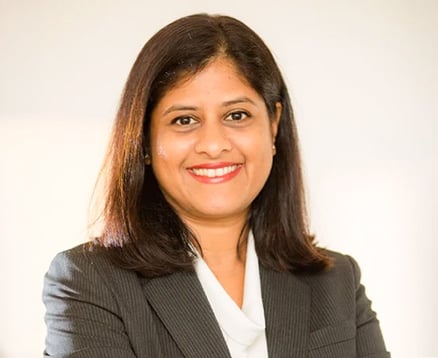
Dr Shweta Pandey is the Assistant Professor and Deputy Director for our Global MBA & Master of Global Business programs at SP Jain School of Global Management.
Additionally, she holds a doctoral degree from the International Management Institute, New Delhi, and a Digital Marketing certificate from Columbia Business School. Her research spans consumer behaviour, AI in marketing, and technology adoption across emerging markets. She has published in ABDC A-rated journals including the International Journal of Bank Marketing, the Journal of Consumer Marketing, and the Journal of Retailing and Consumer Services, and has authored case studies with Ivey and Harvard Business Review. She currently teaches Research Methods and Consumer Insights at SP Jain School of Global Management, Singapore.
Recommended reads:
How to calculate the ROI of a Global MBA
Beyond Borders: The Art of Cross-Cultural Resonance in Modern Marketing
Cross-Border Wealth Boom: India, Dubai, and the Talent Crunch
Three key skills for leaders in the age of AI and digital reinvention
- HubSpot. (2026). State of Marketing Report 2026. HubSpot. https://www.hubspot.com/state-of-marketing
- KPMG International. (2023). Trust in artificial intelligence: A global study. KPMG. https://kpmg.com/xx/en/home/insights/2023/02/trust-in-artificial-intelligence.html
- McKinsey & Company. (2025). The state of AI in 2025. McKinsey Global Institute. https://www.mckinsey.com/capabilities/quantumblack/our-insights/the-state-of-ai
- Pandey, S., Chawla, D., & Puri, S. (2022a). Acceptance of wearable fitness devices in developing countries: Exploring the country and gender-specific differences. Journal of Asia Business Studies, 16(4), 676–692.
- Pandey, S., Chawla, D., & Puri, S. (2022b). Food delivery apps (FDAs) in Asia: An exploratory study across India and the Philippines. British Food Journal, 124(3), 657–678. https://doi.org/10.1108/BFJ-01-2020-0074
- Pandey, S., Pandey, N., & Chawla, D. (2023). Market segmentation based on customer experience dimensions extracted from online reviews using data mining. Journal of Consumer Marketing, 40(7), 854–868.
- Pandey, S., Chawla, D., & Puri, S. (2026). Insurance chatbot adoption and continued usage in emerging markets: Impact of human-agent access. International Journal of Bank Marketing.[R

.jpg)
.png)
.jpeg)
.jpg)


