

India’s household wealth is on a rapid rise and so is the market for managing the wealth. Digitization, growing number of entrepreneurs and increasing options in product classes are some of the factors that can be attributed to this rise.
India’s household wealth is on a rapid rise and so is the market for managing the wealth. Digitization, growing number of entrepreneurs and increasing options in product classes are some of the factors that can be attributed to this rise.
Not surprisingly, Dubai has become a hub for global wealth, especially for Non-Resident Indians (NRIs). Thanks to low taxes, good governance, and ease of doing business. This burgeoning rise has led to an increasing need for qualified financial managers who are savvy at both product knowledge and technology adoption.

Investors are going beyond traditional investments
With increasing level of awareness and accessibility of asset classes, investors today are placing their money into globally in bonds, mutual funds, Portfolio Management Schemes (PMS) and Alternative Investment Funds (AIFs), Real Estate Investment Trusts (REITs) and Investment Trusts (InvITs). With increasing disposable incomes and investors inclination towards investment products, the number of demat accounts has grown over the years and the total investments in Systematic Investment Plans (SIP) contributions are at all-time highs. Today, there is a growing need from both entrepreneurs and salaried employees for organised financial planning.
What regulators are looking for
Regulators are looking for wealth advisors who are formally qualified, come with good records of managing clients and can professionally handle conflicting situations. Registered Investment Advisor (RIAs) in India must follow SEBI's Investment Adviser Regulations, in compliance with stipulated processes such as client agreements, risk analysis, and paperwork. Similarly, distributors need to comply with approval and notice as stipulated by National Institute of Securities Markets (NISM). Similarly, wealth and financial advisors in Dubai require adequate license and required skills.
Level up your skills
So, how does one become part of this growing industry of wealth management? Simply answer, build your skills and be prepared for the future. Some of the core skills would relate to knowledge of the industry, assets and product classes through continuous research, analyzing tactical and strategic risk in investment, and understanding the behavioral and psychological aspects of investors. In today’s digitized world these skills need to be supplemented with software tools such as financial planning software.
So how does one bridge this talent gap?
The SP Jain School of Global Management's ‘Master of Applied Finance and Wealth Management (MFWM)’ program trains new-age financial advisers who can work with India's rapidly growing wealth market and the route between India and Dubai. This unique dual country program provides graduates with an opportunity to seek employment opportunities in these two world’s leading wealth hubs. The program boasts of a curriculum created by industry experts and journeys through practical aspects and includes topics such as goal-based planning, asset allocation, portfolio building, tax, risk, insurance and estate planning taught by industry experts who perfectly bring practice into the classroom.
About the author:
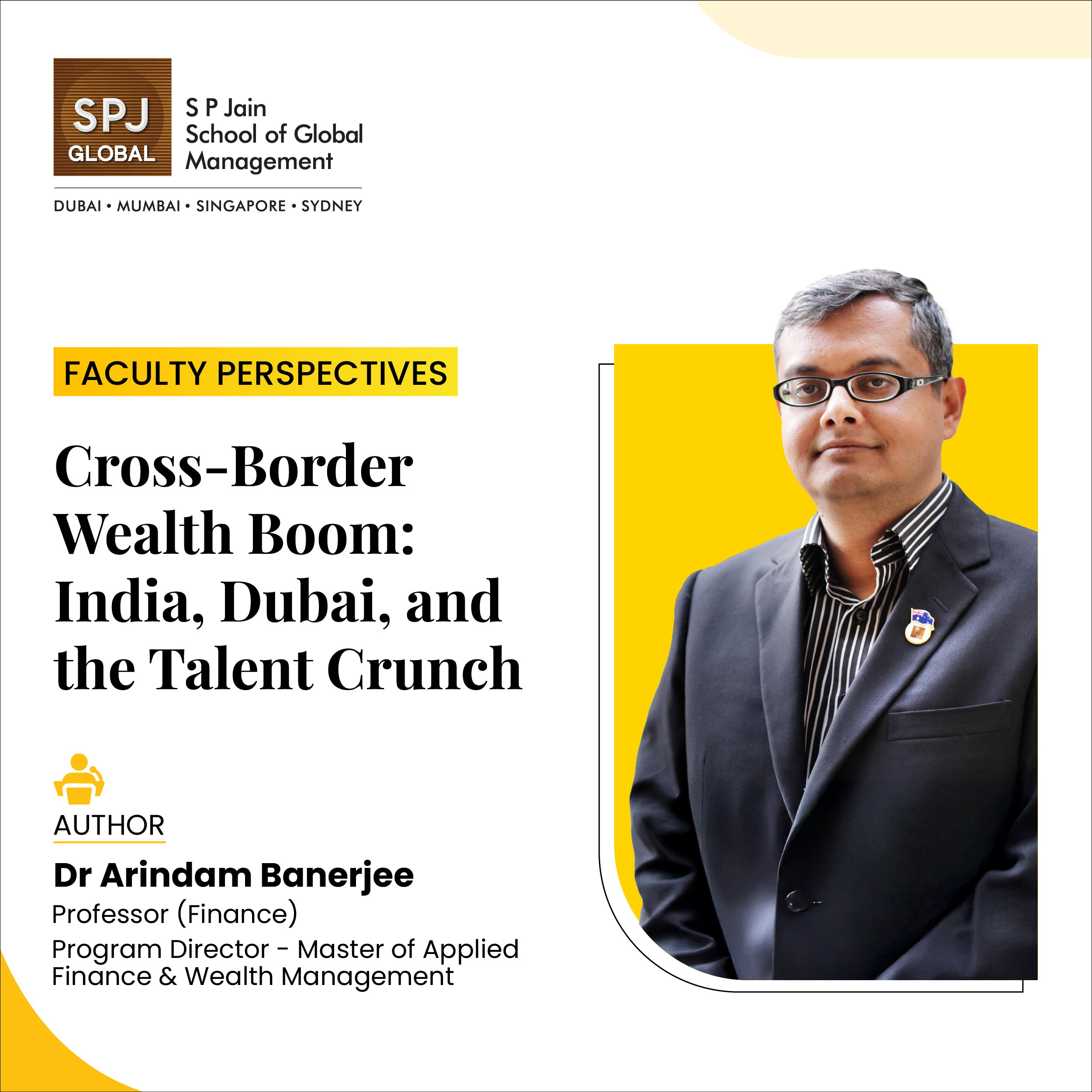
Dr Arindam Banerjee, Professor of Finance at SP Jain Global. He also serves as the director of the “Master of Applied Finance and Wealth Management” program offered by the school.
Recommended Reads:
Private banking 2.0: Redefining wealth for a new era
Risk Advisory in Uncertain Markets
Financial Awareness: Planning Today for a Resilient Tomorrow