


In 2005, an economist warned one of the world's most influential financial gatherings that markets were heading toward catastrophe. He was dismissed, even mocked. Three years later, the 2008 Global Financial crisis proved him spectacularly right. That economist was Raghuram Rajan, who went on to become Governor of the Reserve Bank of India. This lesson is about what economics trains you to do: see structure beneath the noise, hold a rigorous view when the world disagrees and shape decisions that matter. That capacity to think in systems, interpret complexity and translate data into meaning is exactly what the job market rewards today. If you are planning to do a Bachelor of Economics and wondering what to do after, the answer is: quite a lot.
In 2005, an economist warned one of the world's most influential financial gatherings that markets were heading toward catastrophe. He was dismissed, even mocked. Three years later, the 2008 Global Financial crisis proved him spectacularly right. That economist was Raghuram Rajan, who went on to become Governor of the Reserve Bank of India. This lesson is about what economics trains you to do: see structure beneath the noise, hold a rigorous view when the world disagrees and shape decisions that matter. That capacity to think in systems, interpret complexity and translate data into meaning is exactly what the job market rewards today. If you are planning to do a Bachelor of Economics and wondering what to do after, the answer is: quite a lot.
Promising career paths for BEC graduates
A Bachelor of Economics is one of the most versatile qualifications in today's professional landscape. Employers across banking, consulting, government and technology are actively seeking graduates who can think analytically, interpret data and understand market forces. The most promising career clusters right now include:
- Economic analysis and forecasting - thriving at financial institutions, central banks, and consultancies
- Banking, finance, and fintech - strong graduate pipelines as digital financial services expand across Asia and the rest of the world
- Public policy and international organisations - organisations like the World Bank, IMF, and UNDP seek graduates who bridge quantitative rigour with real-world impact
- Management and strategy consulting - where structured economic thinking commands genuine respect
- Data analytics, sustainability economics, and climate finance - among the fastest-growing fields of the decade
Beyond these established pathways, corporate strategy and business-development roles are increasingly open to economics graduates who combine analytical depth with commercial awareness.
Top entry-level roles: Your launch platform
One piece of guidance I return to repeatedly: start as an analyst. Economic Analyst, Research Analyst, Policy Analyst, Data Analyst, Market Analyst - these roles are the most powerful launch platforms for long-term career success right now.
The reason is straightforward: data is king. Getting this grounding early opens an extraordinary range of doors. The strongest senior economists, consultants and policy leaders almost always began exactly this way.
Other entry-level options worth pursuing include Junior Research Associate, Graduate Policy Officer, Assistant Strategy Analyst and Market Research Coordinator roles. A certification in Python, SQL or econometric software can be the difference between shortlisted and rejected.
Opportunities in public policy and consulting
Two areas deserve particular attention. Public policy roles at national, state, or international level offer graduates the chance to apply economic thinking to real societal challenges. Graduate programs at finance ministries, central banks and multilateral organisations are competitive but accessible for well-prepared BEC graduates who can demonstrate both quantitative and policy literacy.
Management consulting is the other standout. Entry-level roles place a premium on analytical thinking, structured problem-solving and comfort with data - areas where BEC graduates hold a natural advantage. Many who begin in economic research find their way into consulting quite naturally; the two fields are more connected than most realise.
Sustainability, fintech, and high-growth emerging fields
Sustainability economics and climate economics are no longer niche. Organisations are building entire teams around ESG strategy, carbon market analysis, and sustainable investment, and BEC graduates with an interest in this area are well-positioned to step into these opportunities.
Fintech is equally compelling. The intersection of economics, data, and financial technology is generating roles that did not exist a decade ago. Across all these fields, the message is consistent: economists who harness data are not just employable, they are highly sought after.
Making the most of SP Jain Global’s Professional Readiness Program
SP Jain Global's Professional Readiness Program available on each campus covers CV design, job search strategy, interview techniques, and networking. Its most valuable element is mentorship from industry professionals who reinforce one truth: tailoring beats volume. One sharp, targeted application outperforms ten generic ones every time.
Achieving your long-term career goals: Work backwards, not forwards
Here is the framing that separates graduates who build careers from those who stumble into them: do not start by scanning what is available. Start by defining what the top looks like for you - Chief Economist, Director of Strategy, Head of Sustainability and reverse-engineer the path from there back to today.
Each analyst role accepted, each skill built, each certification earned is a deliberate step on that map. Career advisors and placement personnel on campus exist to help you draw it. Being visible, proactive, and strategic will serve you at every stage of what I hope is a long and rewarding career. Good luck.
About the author
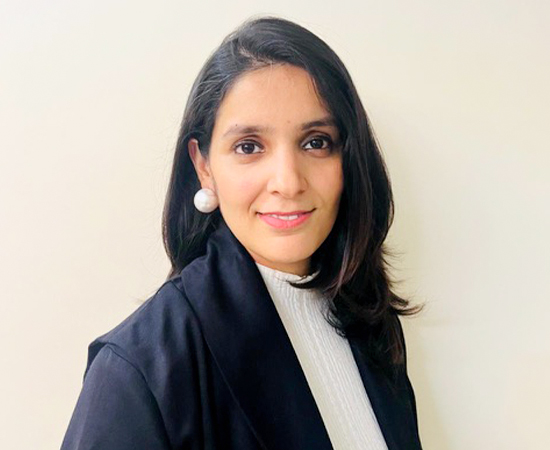
Dr. Charu Bhurat is an Associate Professor & Deputy Director of the Bachelor of Economics (BEC) Program at S P Jain School of Global Management and brings extensive expertise in economics education and applied economic research.
Recommended reads:
Cross-Border Wealth Boom: India, Dubai, and the Talent Crunch
How to calculate the ROI of a Global MBA
Beyond Borders: The Art of Cross-Cultural Resonance in Modern Marketing
The future of technology management: What tomorrow’s business leaders need to know